Showing posts with label beauty. Show all posts

Tuesday, October 15, 2019

How to Freshen Your Face, 1565


John Bulwer, Anthropometamorphosis
Take a bean, and having chewed it well, spit it on a cloth, then rub your face with this, and you will make the face beautiful and glowing, and the skin soft.  
Isabella Cortese, I segreti de la signora Isabella Cortese
Your new secret for dewy skin on-the-go: homemade bean paste!

Friday, June 1, 2018

How to Remove Wrinkles, 12th century


BL Harley 4425, f. 114r
For treating the wrinkles of old women, take a stinking iris, and extract the juice, and smear the face with that juice in the evening, and in the morning the skin will be raised, and it will crack. We treat the eruption with the aforementioned ointment which contains lily root, and by peeling off the skin, after it has been washed, it will appear very fine.  
The Trotula
Who needs Botox and chemical peels when you've got stinking iris?

Monday, August 14, 2017

How to Beautify Your Face, 1660

The Gentlewomans Companion, 1682

"An Ointment that takes away all Bunchings and Speckles of the Face. Take of the roots of Ass-cowcumber, white Been, Bryony, Lupines, each half an ounce, Cerusse, Litharge, Tartar, each one dram; Cane-roots, Serapine, Pigeons dung, each two scruples, Oyl of Turky-millet three ounces, Oyl of Juniper, Oyl of Bread-corn, each two ounces and a half; Juice of Orenges four ounces, pouder what is to be pouder'd, and fine searse them, then boyl them all till the Juice is consumed, then take them from the fire, alwayes stirring them with a spattle till they are cold, then add the white of one new laid Egg beaten and streined; Camphure pouder'd one dram, always mixing them, then wash it in one pint of water, prest from yong Canes, washing it ten times in that water, and stirring it with a spattle, and it is excellent." 
Johann Jacob Wecker, Cosmeticks
Look, beauty has a price, and sometimes that price is collecting pigeon droppings and digging the roots of the ass-cowcumber.

Tuesday, December 29, 2015

How to Get a Manicure, c. 1150

Tacuinum sanitatis (14th c., Biblioteca Casanatense)
One who has very ugly nails should smear them with liquid from the little bladder of the bumblebee and tie it with a band. He should do this until they become beautiful.
Hildegard of Bingen, Physica 
Better make sure your beautician is also trained in entomology.

Friday, February 6, 2015

How to Whiten Your Teeth, 1607

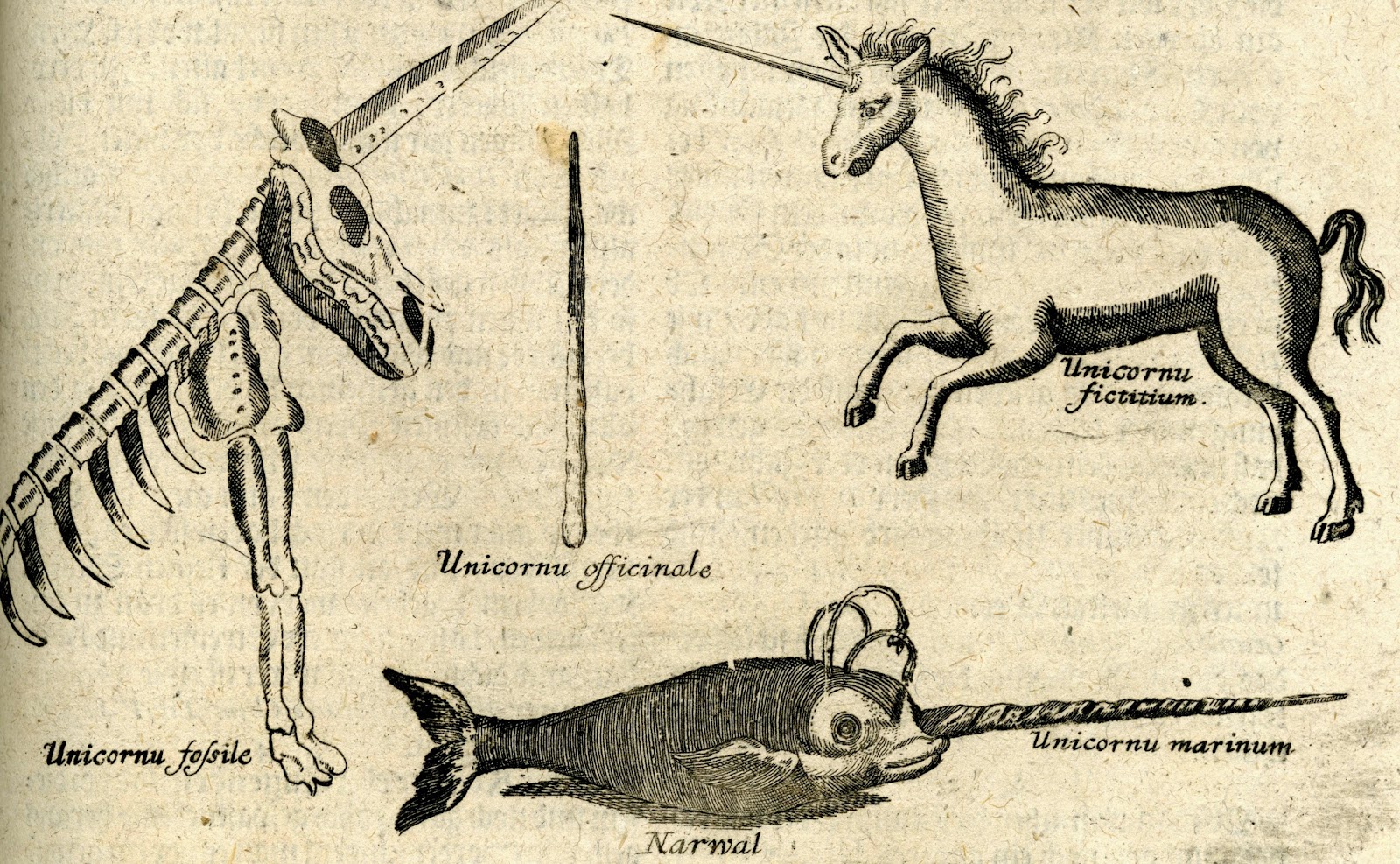
That Unicornu fossile is definitely legit.
Michael Bernhard Valentini, Museum museorum (1714), George Peabody Library.
"The horne of an Vnicorne being beaten and boyled in wine, hath a wonderful effect in making the teeth white or cleare, the mouth being well clensed therewith." 
Edward Topsell, The Historie of Foure-Footed Beastes (1607)
Wine and unicorns really do make everything better, don't they?

Monday, September 30, 2013

How to Deal With a Unibrow, 1881

Konstantin Makovsky,
Portrait of a Woman (c. 1870)

"Some persons have the eyebrows meeting over the nose. This is usually considered a disfigurement, but there is no remedy for it. It may be a consolation for such people to know that the ancients admired this style of eyebrows, and that Michael Angelo possessed it. It is useless to pluck out the uniting hairs; and if a depilatory is applied, a mark like that of a scar left from a burn remains, and is more disfiguring than the hair."

John H. Young, Our Deportment (1881)

Here's a novel approach to the unibrow: ditch the tweezers and just tell everyone you're the next Michelangelo.

Tuesday, June 18, 2013

How to Detect Makeup, 1677

Artemisia Gentileschi,
Susanna and the Elders (1610)
"So that we may recognize made-up faces, do thus. Chew a bit of saffron in your teeth, and bring your mouth close to her face while speaking, so that your breath will cause the makeup to lose color, and make it yellowish, but if she is not wearing makeup, there will be no harm."   
Pompeo Sarnelli, Della magia naturale      (1677)
After you have executed this clever maneuver, you'll want to return to your library in search of advice regarding "what to do when your lady friend asks why you are creeping around breathing on her face and dear God what is that yellow stuff on your mouth."

Monday, June 10, 2013

How to Wash Your Hair, 12th century

"Dear Past, How often should I wash my hair and what should I wash it with? Sincerely, Hair Befuddled in the Present"


Mary Magdalene
14th century, Les Enluminures
"After leaving the bath, let her adorn her hair, and first of all let her wash it with a cleanser such as this. Take ashes of burnt vine, the chaff of barley nodes, and licorice wood (so that it may the more brightly shine), and sowbread... with this cleanser let the woman wash her head. After the washing, let her leave it to dry by itself, and her hair will be golden and shimmering...  If the woman wishes to have long and black hair, take a green lizard and, having removed its head and tail, cook it in common oil. Anoint the head with this oil. It makes the hair long and black." 
The Trotula (12th century)

How frequently you should do this is not explained, but if you are going the lizard-conditioner route, my recommendation is: use sparingly.

Saturday, May 11, 2013

How to Practice Your Side Eye, 1913

                                             
"The muscles of the eyes may be strengthened by slowly moving the orbs from side to side and also by bending the head a little forward and rolling them up and down. One does not want to practise this too many times; the eyes need to be stimulated, not fatigued."

          Marie Montaigne, How to Be Beautiful (1913) 


One does not want to practice this in public, either. Train those orbs in the comfort of your own boudoir before you give the world the side eye. 

Friday, May 10, 2013

How to Please Italian Gentlemen, ca. 1309


Tacuinum sanitatis Casanatense

"Once I was in Venice. We saw a beautiful woman. One of us asked: 'What do you think of that lady?' One replied: 'I would like her if she did not laugh.' Another said: 'Because of that I like her more.' A third answered: 'I would like her best if she could laugh but hide her missing tooth.' I avoid mentioning her name so as not to insult this lady."

          Francesco da Barberino, 

          Reggimento e costumi di 
          donna (ca. 1309)

Oh, that jolly Venetian gal! I bet she lost the tooth in an altercation with an Italian gentleman.